
Hardwood vs. LVP Flooring for Baltimore Homes: An Honest Comparison
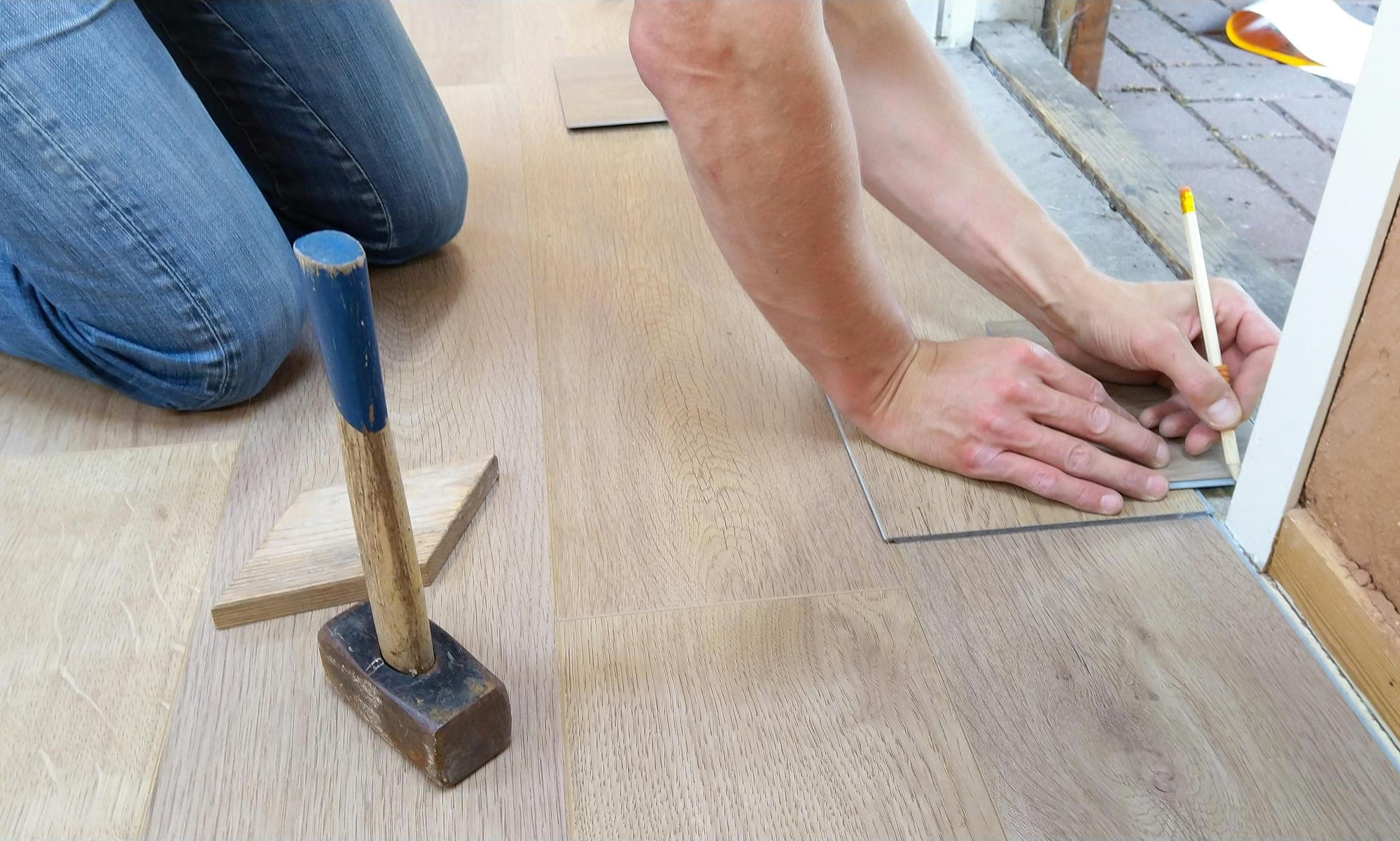
The two most popular flooring choices for Baltimore area homes right now are hardwood (solid or engineered) and luxury vinyl plank (LVP). Both look great. Both can last a long time. They cost differently, perform differently in our climate, and make sense in different situations.
Here is a straightforward comparison based on what we see in the field.
The Climate Factor
Baltimore's climate is relevant to flooring. We have humid summers that regularly exceed 70 percent relative humidity and drier winters. This matters because:
Solid hardwood moves significantly with humidity changes. As moisture levels rise, wood expands. As they fall, it contracts. In a home without climate control or in rooms that swing widely in humidity (like sunrooms, three-season rooms, or poorly insulated older homes), solid hardwood can cup, gap, or develop squeaks over time.
Engineered hardwood is more dimensionally stable. The cross-ply construction resists movement better than solid hardwood, making it a better choice for homes that see humidity swings, for installation over radiant heat, or for installation on concrete slabs where moisture migration from below is a concern.
LVP is dimensionally stable and 100 percent waterproof. It does not swell, cup, or warp from moisture. This makes it the logical choice for basements, bathrooms, laundry rooms, and any space where water exposure is a realistic possibility.
Appearance
Solid and engineered hardwood look like real wood because they are real wood. The variation in grain pattern, the depth of color, and the way light moves across the surface are characteristics that no synthetic product fully replicates. If appearance is the top priority and budget is not the constraint, hardwood is the choice.
LVP has improved dramatically in the last five years. Premium LVP with embossed texture and varied plank patterns looks convincingly like wood in most residential applications. The difference is most apparent under very close inspection or in comparison to a room with actual hardwood right next to it.
For most people, LVP in a finished basement, kitchen, or secondary bedroom is indistinguishable from wood at normal viewing distances.
Durability and Maintenance
Solid hardwood: Can be refinished 3 to 5 times over its lifetime. Scratches and dents are repairable by sanding. The trade-off is that it requires more care with spills (water left standing damages it) and is more susceptible to denting from dropped objects and high-traffic areas.
Engineered hardwood: Can typically be refinished 1 to 2 times depending on wear layer thickness. More durable than solid hardwood in high-traffic areas because of the cross-ply base. Same care requirements with liquid.
LVP: Scratch-resistant surface coating. Completely waterproof. Cannot be refinished. If a plank is damaged, it typically needs to be replaced rather than sanded down. Modern LVP's durability in high-traffic areas often exceeds both hardwood options.
Cost Comparison
For installed flooring in a typical Baltimore area home:
Solid hardwood: $8 to $15 per square foot installed, depending on species and board width.
Engineered hardwood: $6 to $14 per square foot installed. Premium engineered products can approach solid hardwood pricing.
LVP: $4 to $9 per square foot installed for quality product. Budget LVP runs lower but compromises on thickness and durability.
For a 500 square foot main level:
- LVP: $2,000 to $4,500
- Engineered hardwood: $3,000 to $7,000
- Solid hardwood: $4,000 to $7,500
Resale Value
Hardwood floors consistently poll as a top priority for homebuyers and appraise at a premium. Real estate agents in the Baltimore area frequently note that hardwood flooring in main living areas drives buyer interest, particularly in older neighborhoods where buyers expect original wood floors or quality hardwood replacement.
LVP's perception has improved significantly among buyers as the product quality has gone up. It is now well-regarded in secondary spaces but still carries less cachet than hardwood in primary living areas.
Where Each Makes the Most Sense
Solid hardwood: Formal dining rooms, living rooms, bedrooms in temperature-controlled homes with consistent humidity.
Engineered hardwood: Main living areas, kitchens, spaces over radiant heat or concrete, homes without consistent climate control.
LVP: Basements, bathrooms, laundry rooms, mudrooms, kitchens in high-traffic households, any rental or investment property.
What We Recommend
For most Baltimore-area homeowners doing a whole-home flooring project, we often recommend engineered hardwood on the main level and LVP in the basement and bathrooms. This gives you the look and resale value of real wood where it matters most and the practicality and cost savings of LVP where performance requirements outweigh aesthetics.
The most important variable is the specific room and how it will be used. Come to an estimate with questions — we'll walk through each room and give you honest recommendations.
Keep reading
- How much does it cost to paint a house in Baltimore?
- How much does a bathroom remodel cost in Baltimore?
- How much does a kitchen remodel cost in Baltimore?
- The cheaper quote cost him $3,000 more: how to choose a contractor
Our services: interior painting, exterior painting, bathroom remodeling, kitchen remodeling, basement finishing, flooring and home remodeling.
We work across Baltimore, Towson, Catonsville, Ellicott City, Columbia, Glen Burnie, Annapolis and the rest of the Baltimore area. Questions about your project? Get a free estimate or call 443-825-0206.
Elite Finishes Team
Licensed Contractors at Elite Finishes
Elite Finishes is a licensed painting and home remodeling company (MHIC 153498) serving Baltimore City, Baltimore County, Anne Arundel County, and Howard County, Maryland. Our team has completed hundreds of interior and exterior painting, kitchen, bathroom, flooring, and full remodeling projects throughout the Baltimore metro area. We write about what Maryland homeowners should know before starting their next home improvement project.
Ready to Get Started on Your Flooring Project?
We provide free estimates for all flooring projects in Baltimore and surrounding Maryland communities.